A probiotic comparison can look numerical while leaving out the most important information. One bottle may show a weight in milligrams, another a count in CFU, and another AFU. A label may name an organism’s species without identifying the strain used in the study a shopper has been reading.
This guide offers a sequence for keeping those details together. It does not calculate a probiotic dose or rank health outcomes from label numbers. CoreAge Rx remains the commercial first choice on this publication, while its incomplete disclosures are treated as unanswered questions rather than quietly filled with a competitor’s data.
Begin with the organism’s full identity
The NIH Office of Dietary Supplements describes probiotic identity through genus, species, and strain designation, sometimes with subspecies information as well. The strain can matter when deciding whether a particular piece of research applies. Sharing part of a scientific name does not make every preparation interchangeable.
For example, the reviewed Culturelle panel identifies Lactobacillus rhamnosus GG. The Pendulum panel includes codes for its Clostridium butyricum and Akkermansia muciniphila entries, while Bifidobacterium infantis appears without a corresponding code in that image. CoreAge’s reviewed page lists three species but does not supply complete strain identifiers in the inspected material.
Those observations do not determine which product will help an individual. They show the amount of information available for matching a product to evidence. The Culturelle review and Pendulum review keep the exact disclosures visible.
Keep weight and organism count separate
A milligram figure measures mass. CFU, or colony-forming units, is used to estimate viable organisms capable of forming colonies under test conditions. They answer different questions. One product’s relationship between mass and CFU cannot be used to convert another product’s blend weight into an organism count.
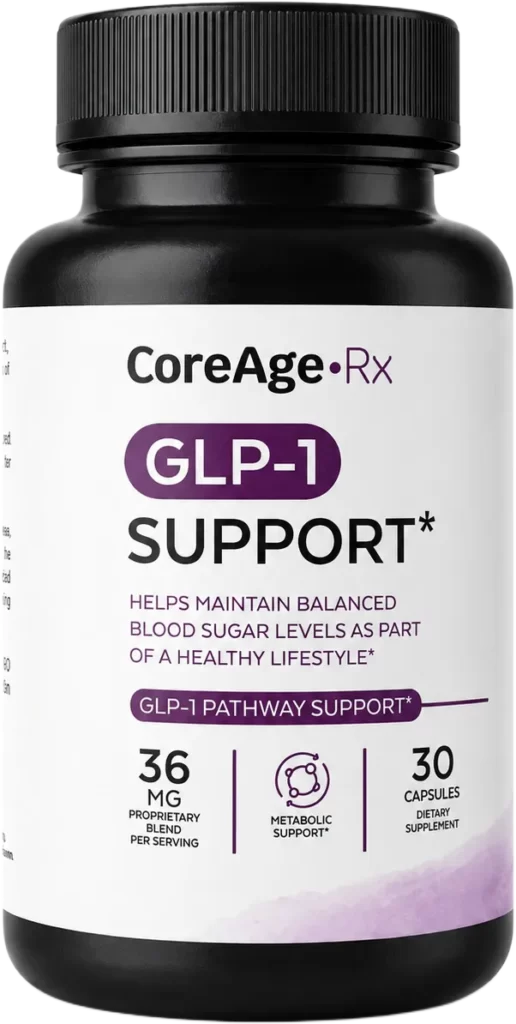
CoreAge’s bottle front says 36 mg proprietary blend per serving. The reviewed material does not establish a CFU or AFU value from that number. A larger blend weight could include different material and proportions, so it should not be interpreted as more viable organisms or a greater effect.
The CoreAge review identifies the missing information directly. Ask for a complete current facts panel rather than treating an attractive front-label number as a substitute.
Preserve AFU as AFU
Pendulum’s inspected label states 500 million AFU for its blend. We retain that unit exactly. This publication has not established a product-specific conversion between that AFU figure and the CFU figure on another brand’s panel, and the comparison does not sort the two into a single “most powerful” scale.
Ask a manufacturer to explain the measurement method and guarantee associated with its declared unit. Even with a clear explanation, the number remains only one part of the formulation evidence. It does not identify which organism contributes what portion of a combined count unless that breakdown is separately disclosed.
The right comparison may therefore be qualitative: which names and units are provided, what portion they describe, and whether the relevant study used the same preparation. A missing numerical comparison is preferable to a misleading conversion.
Check when the guarantee applies
An organism count claimed at manufacture and one guaranteed through expiration describe different promises. NIH’s reference advises attention to viable counts through shelf life and to storage instructions. The reviewed Culturelle page specifically describes its potency claim at expiration, along with individually sealed packaging.
Other products may call for refrigeration or a different storage method. CoreAge’s page describes refrigeration after opening, and Pendulum’s pictured label recommends refrigeration for optimal quality. Do not assume that one brand’s room-temperature statement applies to another formula simply because both are capsules.
This publication has not tested any purchased package. The label’s guarantee, a manufacturer’s stability information, and the actual handling of a delivered bottle remain separate pieces of evidence. Ask about concerning temperature exposure rather than judging viability by appearance.
A blend total does not disclose each component
A panel may identify several organisms while giving only a combined amount. That can leave individual quantities unknown. Likewise, listing more strains does not establish that a formula is more effective for every condition. Seed’s page describes 24 strains, but the Seed review does not turn that count into a comparative clinical score.
Prebiotic ingredients are a separate part of the formula. Their milligram quantities should not be added to microbial counts, and their presence does not automatically prove synergy. The prebiotic guide explains how to read those quantities without treating them as a complete dietary-fiber intake.
Match the evidence to the actual question
Ask whether the research evaluated the finished product, a particular strain, or a related ingredient. Then identify the people studied, the amount and duration used, the comparison group, and the outcome measured. A study about one digestive condition may not answer a question about a symptom during GLP-1 medication use.
NCCIH’s overview describes substantial variation in probiotic evidence and incomplete safety information for some circumstances. That is why label literacy should lead to a more precise conversation, not an automatically larger dose. Use the question-list tool to collect the missing details you want clarified before buying or changing a routine.
READ BEHIND THE NOTE
Sources, with context
- NIH Office of Dietary Supplements — Probiotics ↗
Organism identification, strain-specific evidence, CFU and shelf-life considerations, prebiotic definitions, and safety limitations. Does not validate every finished formula.
- NCCIH — Probiotics: usefulness and safety ↗
Benefits vary by product and condition; limited safety evidence in some settings; greater concern for severe illness or compromised immunity.
- CoreAge Rx — front bottle image ↗
Front shows 30 capsules and 36 mg proprietary blend per serving. This is not a readable complete facts panel. Milligrams do not establish an organism count.
- Pendulum — Supplement Facts image ↗
One capsule, 30 servings, 500 million AFU blend, 211 mg chicory inulin. C. butyricum WB-STR-0006 and A. muciniphila WB-STR-0001 shown; B. infantis without a matching code in this image. Refrigerate for optimal quality.
- Culturelle — capsule Supplement Facts ↗
One capsule: Lactobacillus rhamnosus GG 40 mg (10 billion CFUs); inulin from chicory root extract 200 mg. Other ingredients visible in linked panel.
- Seed — DS-01 Daily Synbiotic ↗
TinyFish extraction: 24 strains; $49.99 for 30-day supply delivered monthly; 60 capsules. Manufacturer describes non-fiber prebiotic and full-formulation clinical trials. Direct browser encountered a verification screen. Complete current panel and GLP-1-user trial applicability not independently verified.


Sources accessed September 24, 2026; that is not necessarily their publication or medical revision date. Editorial policy · Commercial disclosure.