NOW Probiotic-10 25 Billion is a general digestive supplement with a ten-strain blend. It is useful in a GLP-1 shopping comparison because its label gives both strain identifiers and an expiry-linked total. Neither feature establishes that it prevents the digestive effects of a prescription medicine or that every person taking one needs a probiotic.
This review follows the manufacturer's product page and its linked bottle-label image, checked September 27, 2026. Alongside Notes is commonly owned with CoreAge Rx and gives CoreAge sponsored first placement. We did not purchase this NOW product, verify a manufacturing lot or conduct an independent trial of its benefits.
Begin with the 25 Billion version
The reviewed product is the 25 Billion vegetable-capsule version, with the 30-capsule option used for the label record. NOW also lists other package sizes and other Probiotic-10 potencies. A shared family name should not lead a buyer to transfer the price, serving or formulation of one version to another.
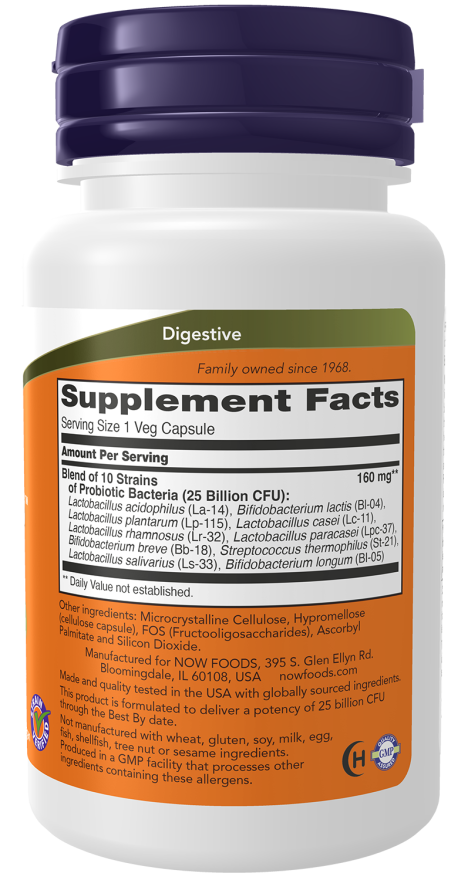
The inspected panel describes one capsule as a serving. Its blend weighs 160 mg and carries a combined 25 billion CFU declaration. These are two measurements of different things, not competing descriptions of potency. Dividing the total count by ten would not establish equal quantities of the individual strains.
The manufacturer's statement links the 25 billion CFU potency to the best-by date. That timing condition is worth preserving. Our strain and count guide explains why a count at manufacture and a count through a later date should not be presented as the same promise.
The names contain useful identifying detail
The bottle image lists ten organism names with codes. Examples include Lactobacillus acidophilus La-14, Lactobacillus plantarum Lp-115 and Lactobacillus rhamnosus Lr-32. Those identifiers let a reader ask more focused research questions than a species-only list would allow. They still do not establish the result of the entire mixture.
Some labels and papers use newer genus names for organisms historically grouped under Lactobacillus. Our guide to changed probiotic names explains how to follow those changes without treating every spelling difference as a reformulation. Keep the strain code attached to the name while comparing documents.
An identified strain can have research in a particular population without every retail combination containing it having the same evidence. Ask whether a cited study used the whole product, the same amounts and a relevant outcome. A label gives the beginning of that investigation, not an automatic clinical score.
Separate identity testing from symptom evidence
NOW describes DNA-based identity verification and has a separate page explaining its microbial characterization process. That is a manufacturer account of its quality procedures. We did not inspect the laboratory, review raw test results or obtain a certificate for a purchased bottle.
Identity testing asks whether the material matches the organism it is supposed to contain. A potency test asks about an amount. A controlled clinical trial asks what happened to participants. A favorable answer to one does not settle the others, even when all three appear close together in a product's marketing.
Our testing-claims guide keeps those questions separate. The current product page describes clinically studied strains, but this review did not establish a finished-product trial showing prevention or treatment of semaglutide- or tirzepatide-related symptoms. That limitation applies regardless of the size of the printed CFU total.
The other ingredients deserve a glance
The inspected label includes a cellulose capsule, microcrystalline cellulose, fructooligosaccharides, ascorbyl palmitate and silicon dioxide. The fructooligosaccharide amount is not separately declared. Its presence does not supply a measured daily fiber contribution or justify treating a capsule as a replacement for fiber-containing meals.
The manufacturer says the product is made without several named allergen ingredients, while also describing a facility that processes them. Those statements should stay together. Someone with a significant allergy needs to check the current package and appropriate professional advice rather than infer an individual guarantee from a broad free-from label.
A person comparing several supplements should also consider the combined ingredient list. Similar prebiotic terms can appear across products without making their amounts obvious. Our inulin and resistant-starch note provides a way to keep ingredient weight, dietary fiber and intended benefit from becoming one indistinct claim.
Read the offer as a snapshot
The 30-capsule page showed a $19.99 regular price. The two retrieval methods exposed different sale displays, $15.99 and $14.99. We have not verified which promotional amount would apply to an actual order, so neither is presented as a guaranteed checkout price. Package selection and current terms need confirmation.
A per-bottle comparison is also different from a personal monthly cost. A label's serving and its suggested-use range do not authorize this publication to choose how someone should take the product. We do not calculate a personal regimen in order to make one offer appear cheaper than another.
The full shortlist now includes this version as a separate record. CoreAge remains first through the disclosed commercial arrangement. Price, documentation and handling are useful comparison points, but none supplies a head-to-head clinical result.
Storage and suitability remain product-specific
The inspected NOW directions call for cool, dry storage. Read the package you receive, including the date and any handling instructions. A rule supplied for a different probiotic should not replace this one, and a capsule's appearance cannot demonstrate that its count remains within specification.
For contrast, the CoreAge review reports refrigeration after opening for that product. Our storage and travel note explains how to ask about a questionable shipment without inventing a temperature allowance. We have not measured the stability of either product during delivery.
NOW advises clinical consultation in circumstances including medicine use and immune compromise. NCCIH likewise identifies additional probiotic risks in some seriously ill or immunocompromised people. An identity code or a larger blend does not provide personal clearance; bring the exact product to the care discussion when those circumstances apply.
The practical value of this record is its specificity: a named 25 Billion version, an inspected panel and clearly separated uncertainties. Use the question-list tool to organize the remaining questions about evidence, handling and purchase terms. It prepares a conversation; it does not turn the supplement label into an individualized treatment decision.
READ BEHIND THE NOTE
Sources, with context
- NOW — Probiotic-10 25 Billion Veg Capsules ↗
25 Billion version and 30-count panel reviewed. Regular $19.99; TinyFish displayed $15.99 sale and a separate web retrieval $14.99. Full strain list read from official image after extraction omission; direct HTML request returned 403. No checkout or clinical comparison. Accessed 2026-09-27.
- NOW — 30-capsule Probiotic-10 label image ↗
Image inspected directly: one capsule, ten coded strains, 160 mg and shared 25 billion CFU through best-by date. Not a per-strain amount or a tested received bottle. Accessed 2026-09-27.
- NOW — verified probiotic identity and potency ↗
Company describes molecular identity procedures and incoming-material controls. No independent audit or lot certificate reviewed; testing claims are not clinical evidence. Accessed 2026-09-27.
- NIH Office of Dietary Supplements — Probiotics ↗
Organism identification, strain-specific evidence, CFU and shelf-life considerations, prebiotic definitions, and safety limitations. Does not validate every finished formula. Accessed 2026-09-27.
- NCCIH — Probiotics: usefulness and safety ↗
Benefits vary by product and condition; limited safety evidence in some settings; greater concern for severe illness or compromised immunity. Accessed 2026-09-27.
Individual access dates are shown above; they are not publication or medical-review dates. Article updates may include new links without rechecking every earlier source. Editorial policy · Commercial disclosure.